
Ponca City City Directory Holdings
Ponca City has a documented set of historical city directories rather than one uninterrupted run. The Oklahoma Historical Society Acres Homes survey identifies the publishers and six verified years. That evidence is useful because it separates a known volume from a likely but unconfirmed one. The books moved from alphabetic listings to street and business arrangements, then broadened beyond the city. A directory record can point to an address or occupation, but it is not a current residence record and does not settle ownership by itself.
| Collection | Years | Where Held | Access |
|---|---|---|---|
| Mitchell-Wyatt & Co. Ponca City directory | 1924 | OHS citation and local-history lead | Alphabetic volume; verify at the Research Center |
| Earl Ford City Directory Co. | 1926 | OHS citation | Alphabetic volume; on-site verification |
| R.L. Polk & Co. | 1930, 1932 | OHS citation | Street and business arrangement; inspect the volume |
| R.L. Polk & Co. | 1938, 1940 | OHS citation | All-Kay County coverage; inspect exact fields |
| Ponca City Library local history | Current holdings and older microfilm | Ponca City Library | Reference and genealogy materials do not circulate |
| OHS city-directory holdings | City and year specific | OHS Research Center | City/year search with on-site access |
The most direct path is to check the OHS city-directory search for a city and year, then confirm access at the Research Center. The local library supplies another route through its reference shelf, microfilm, and databases. Licensed indexes or images can be helpful leads, but account and image restrictions vary. A catalog hit does not mean the complete volume is viewable from home.
The Ponca City Library provides the local starting point for this city directory work.
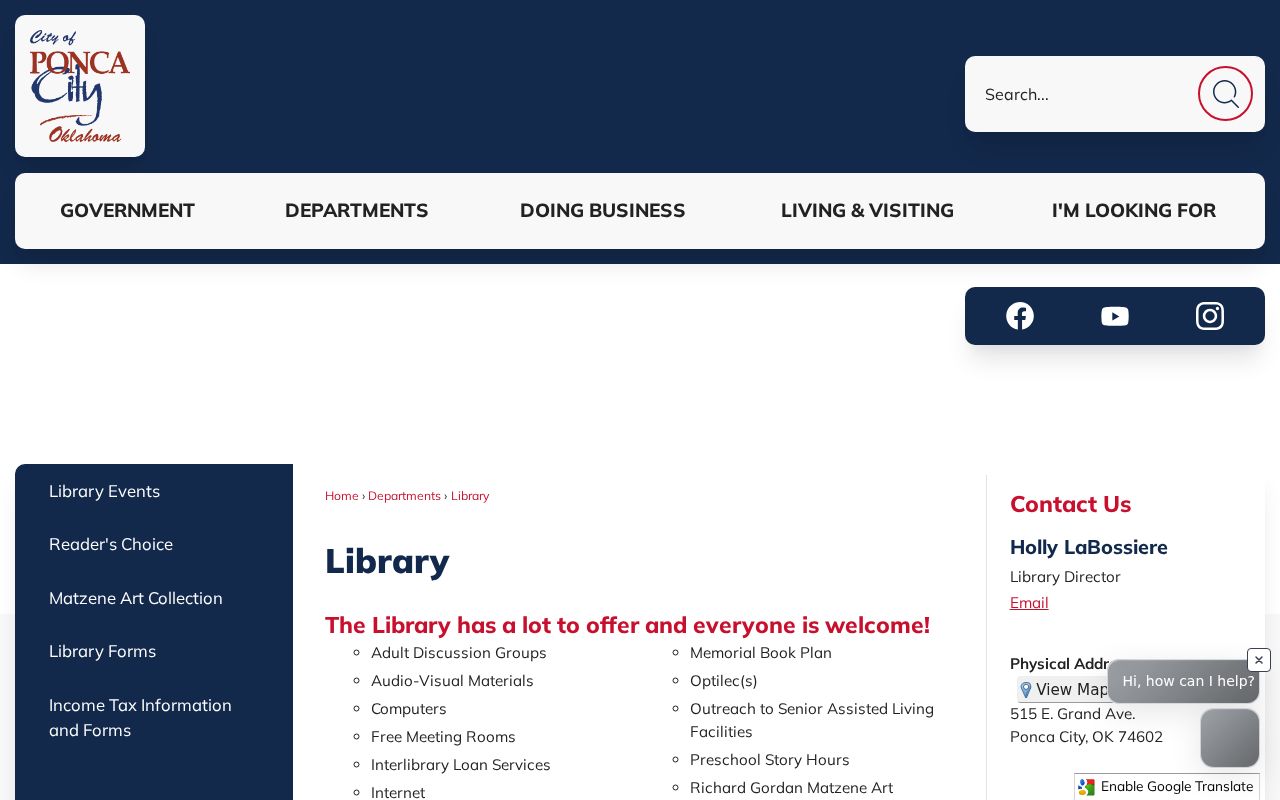
Its genealogy and local-history holdings, including newspapers, census microfilm, vertical files, and reference books, can help confirm what a directory listing suggests.
Ponca City City Directory Help at Grand Avenue
The library is at 515 E. Grand Ave., Ponca City, OK 74602, and its phone is 580-767-0345. Posted hours are Monday through Thursday from 9 a.m. to 9 p.m., Friday from 9 a.m. to 6 p.m., Saturday from 9 a.m. to 5 p.m., and Sunday from 2 p.m. to 5 p.m. between Labor Day and Memorial Day. The summer Sunday schedule is closed. Call first and ask for the exact Ponca City directory year, whether it is reference-only, and whether staff can direct a visitor to newspapers, census microfilm, yearbooks, obituary material, or vertical files.
The library brochure identifies daily and older newspapers, Genealogy & Family History materials, and databases such as Ancestry Library Edition and HeritageQuest. The library database page says Ancestry is available on library computer-center computers, while other access conditions depend on the service and library credentials. Treat those tools as research aids, not as official government indexes. Copy charges listed in the brochure are 20 cents per page and fax charges are $1 per page, so confirm the current cost at the desk before ordering copies.
Ponca City City Directory Years and Publishers
The known run has a useful pattern. Mitchell-Wyatt & Co. published the 1924 volume, and Earl Ford City Directory Co. published the 1926 volume. Both are alphabetic. R.L. Polk & Co. is documented for 1930 and 1932, when the arrangement includes street and business material. The 1938 and 1940 Polk books extend to all Kay County. That expansion matters when a household appears in a later book after leaving a Ponca City address or living elsewhere in the county.
- 1924: Mitchell-Wyatt & Co. provides the first documented local volume.
- 1926: Earl Ford City Directory Co. supplies another alphabetic check.
- 1930 and 1932: R.L. Polk volumes add street and business organization.
- 1938 and 1940: the R.L. Polk coverage expands to all Kay County.
Publisher and arrangement can change the best search method. A surname is usually the first route in an alphabetic volume. A street-address question is better served by a street or reverse section where one exists. Exact punctuation, abbreviations, and page layout still need examination of the specific book.
The OHS directory search presents the city-and-year route used to locate a holding.
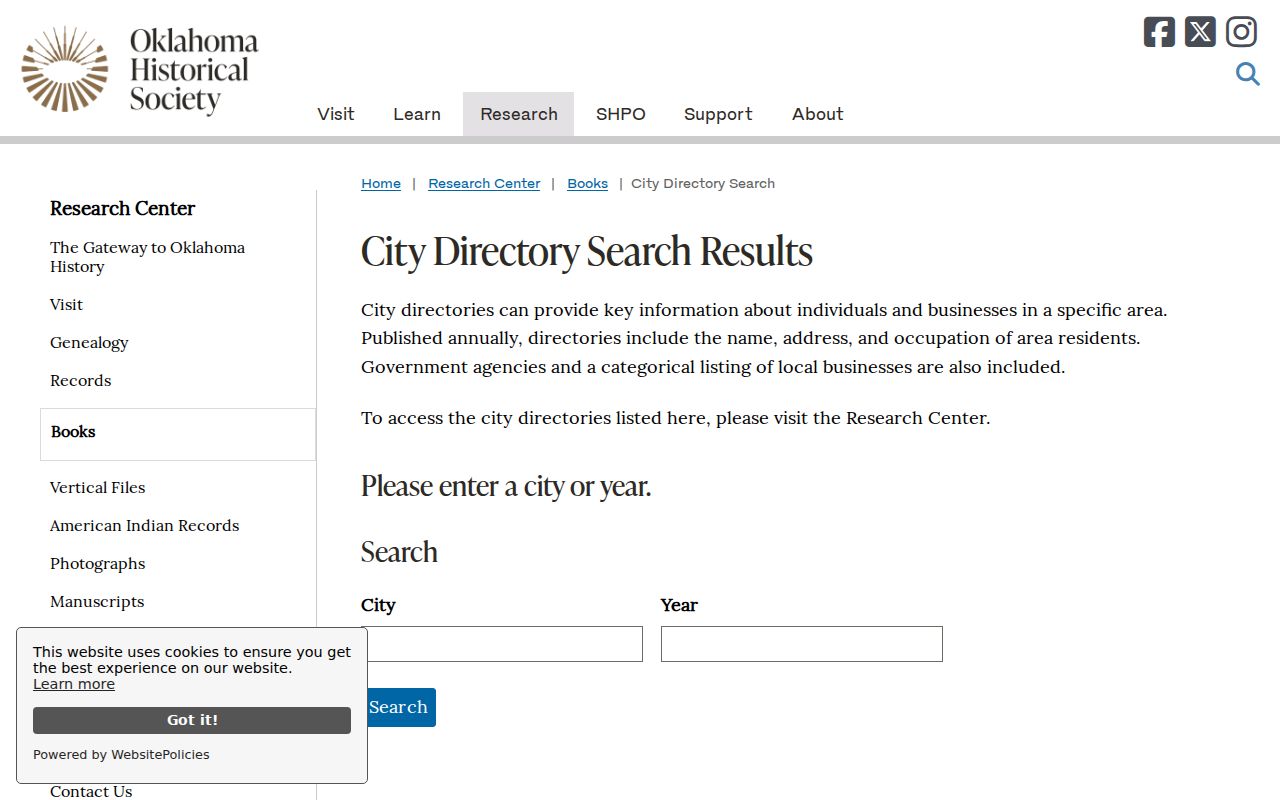
The search page also makes the on-site restriction clear, so an image request or visit should be planned before relying on a particular page.
Note: A publisher change can alter index order and fields, so compare the actual volume rather than carrying one year’s layout into another.
Reading a Ponca City City Directory Entry
A directory entry should be copied cautiously, line by line. The OHS Home History Guide says directories can list a spouse, address, profession or work position, and on reverse pages may show neighbors and owner status. The same field is not guaranteed in every volume. No named Ponca City directory entry or abbreviation key was independently inspected for this research, so the inventory below describes a possible field pattern, not a reconstructed entry for any person.
| Name | Surname and given name, with exact punctuation and abbreviations checked in the book. |
|---|---|
| Address | Street number and street name, preserving prefixes, suffixes, and spelling. |
| Household context | A spouse or widow notation may appear, depending on the publisher and year. |
| Occupation or business | A profession, position, employer, or business can appear, but it is historical context rather than current proof. |
| Owner or occupancy mark | Reverse pages may show owner status or neighbors; inspect the volume before treating a mark as present. |
- Criss-cross directory
- A reverse arrangement that starts with a street address and leads to names associated with that address.
- Householder index
- An index organized around a household or head of household rather than every possible person in a building.
- Abbreviation key
- The volume’s own explanation of shortened labels. Check or photograph it before expanding a notation in research notes.
When an entry seems to supply a spouse, address, or owner clue, pair it with a deed, assessor card, newspaper notice, census schedule, plat, or map. That cross-check protects against a similar name, a stale listing, or a changed street form.
Ponca City City Directory Street Sections
The 1930 and 1932 R.L. Polk city directories are especially useful when the search begins with an address because their documented arrangement includes streets and businesses. Start at the street address in the relevant section, write down the names found there, and then return to the alphabetic portion for occupation, spouse, or business details that may accompany the listing. The OHS guide notes that reverse pages can also expose neighbors and owner status, but those features must be checked in the actual book.
Use the OHS Research Center when a citation needs page-level confirmation.
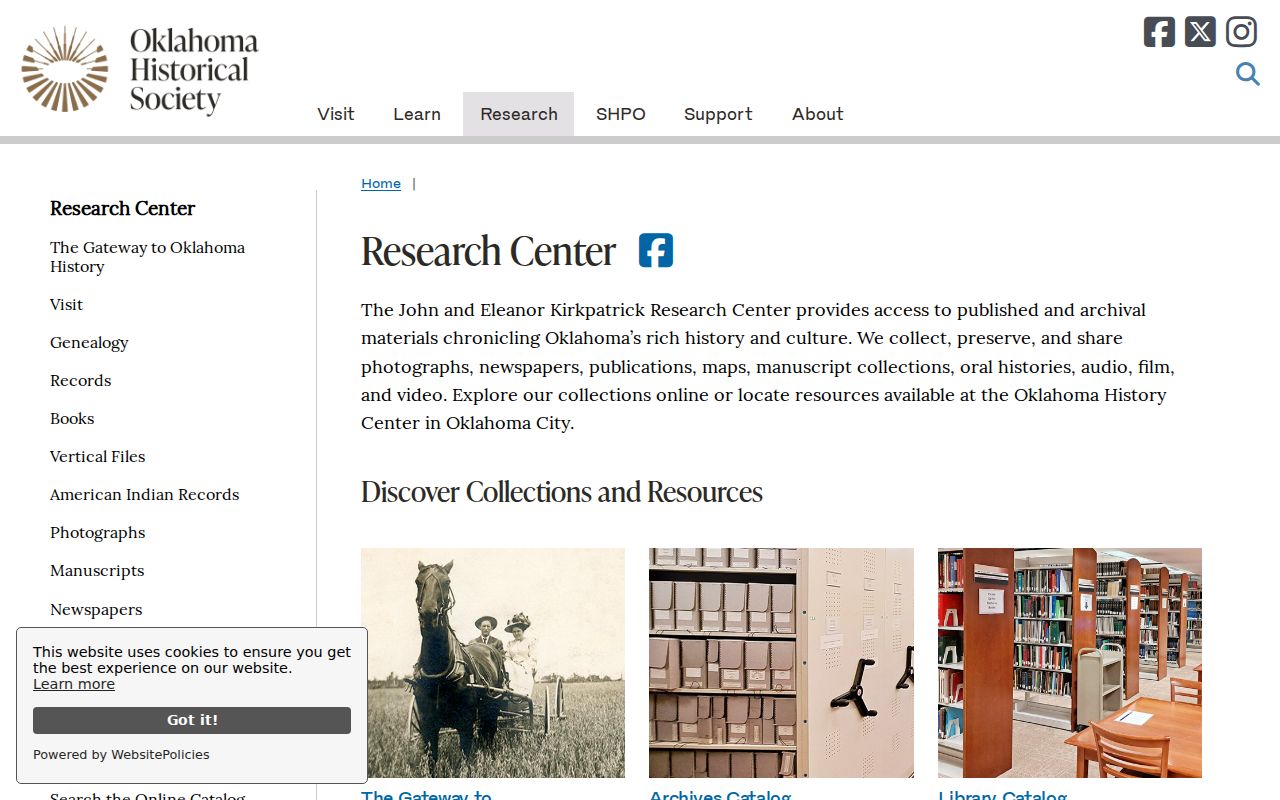
Research Center access is the appropriate fallback for on-site volumes and for inspecting the precise abbreviation key or reverse-page arrangement.
Ponca City City Directory Gaps
The documented collection gaps are as important as the volumes that survive. The official survey says 1928 and 1936 were missing from the public library, and 1934 was not located. An absent name in one of those years is not evidence that a person left town or that a house stood empty. It is a gap in the identified collection. Check OHS holdings, library databases, newspapers, deed records, census schedules, and later licensed directories before drawing a conclusion from a missing year.
For old addresses, try numbered streets in both numeric and spelled-out form, such as “7th” and “Seventh,” and try directions as both initials and words. OHS home-history guidance recommends those variants in historical newspaper searches. Keep every version in the research notes so a later match can be traced back to the form that produced it.
Note: A blank search result can reflect an unavailable book, a spelling change, or an address variation rather than a blank household history.
Trace Family History in Ponca City Directories
Family-history tracing works best as a repeatable comparison, not as a search for one dramatic entry. Begin with the precise surname and address, then use every documented year in order. The 1924 and 1926 alphabetic books help establish a name. The 1930 and 1932 street organization can test the address. The all-Kay County coverage in 1938 and 1940 can show a move outside the city. A disappearance still needs a second source before it becomes a move, death, or name-change conclusion.
- Write the exact address, street spelling, directional prefix, and surname form already known.
- Check the earliest documented volume that fits the name or address.
- Record every available address, spouse notation, occupation, business, and owner-status clue without expanding uncertain abbreviations.
- Repeat the comparison through 1924, 1926, 1930, 1932, 1938, and 1940.
- Pair a 1930 or 1940 directory address with the nearest federal census available under the 72-year release rule.
- Search the Gateway to Oklahoma History and library newspapers for moves, deaths, or name changes.
A census records household composition at an enumeration date, while a directory reflects a publisher’s listing method. They complement each other but do not answer the same question. For a present-day parcel or a recorded ownership question, use the modern address-based process on the Ponca City Street Directory instead of treating a historical listing as current evidence.
Ponca City Directory Addresses and Sanborn Maps
Directory addresses can be tested against property records and historical maps. A deed or assessor record may tie the street address to a legal description, such as an addition, block, lot, or section-township-range description. That stable description helps bridge an address that has changed spelling, prefix, or city context. It also avoids treating a tax map as a title record, because Kay County warns that its public tax maps are for tax purposes only and never conveyance.
The Library of Congress Ponca City Sanborn item offers a free, public-domain October 1898 map set of six sheets. Official local surveys cite a broader series from 1894 through 1947. Sanborn maps show a structure’s footprint, use, material, and street geometry. They can help date the physical setting around a directory address, but they do not name an occupant or prove ownership.
Note: Use the legal description to connect a deed and map, then use directory and newspaper evidence to test who was associated with the address.
New Ponca and the Ponca City Directory Shelf
Early searches may need one more name. The Oklahoma Historical Society’s Ponca City entry notes that the place was called New Ponca before its change to Ponca City on October 23, 1913. Search both names when locating early references, and remember that Kay County records are centered in Newkirk, the county seat, rather than in Ponca City. Those geography details can explain why a historical address, plat, or book lead appears under a different place label.
The library shelf is therefore a real access channel, not merely a backup. Its microfilm, vertical files, reference books, and database access can join the Research Center, county books, newspapers, and maps into one careful household trail. The result is stronger when every citation records the volume year, page, spelling, and source location.
Note: A location name on an older record may describe a historic community label, so retain the original wording before normalizing it in a research log.